




At Royal Markys British Shorthair Cattery, every breeding decision is based on health, genetics, and the long-term well-being of our cats and kittens.
Responsible breeding is about much more than beautiful appearance, excellent temperament, or impressive pedigrees. It requires health testing, careful planning, and a solid understanding of feline genetics.
DNA Health Testing
DNA health testing helps breeders identify known genetic variants associated with inherited diseases. This information allows responsible breeders to make informed breeding decisions and reduce the risk of passing certain hereditary conditions to future generations.
Our breeding cats have completed comprehensive DNA health testing through Wisdom Panel™, providing valuable information about their genetic health, inherited traits, and genetically predicted blood types.
Although DNA testing cannot guarantee that a cat or kitten will never develop a medical condition, it is an essential part of a responsible breeding program.
Why Feline Blood Type Matters
Cats have three main blood types:
- Type A
- Type B
- Type AB
The feline AB blood-group system is inherited. Type A is the most common blood type, Type B occurs more frequently in some pedigree breeds, and Type AB is relatively rare.
Blood typing is especially important when planning a breeding.
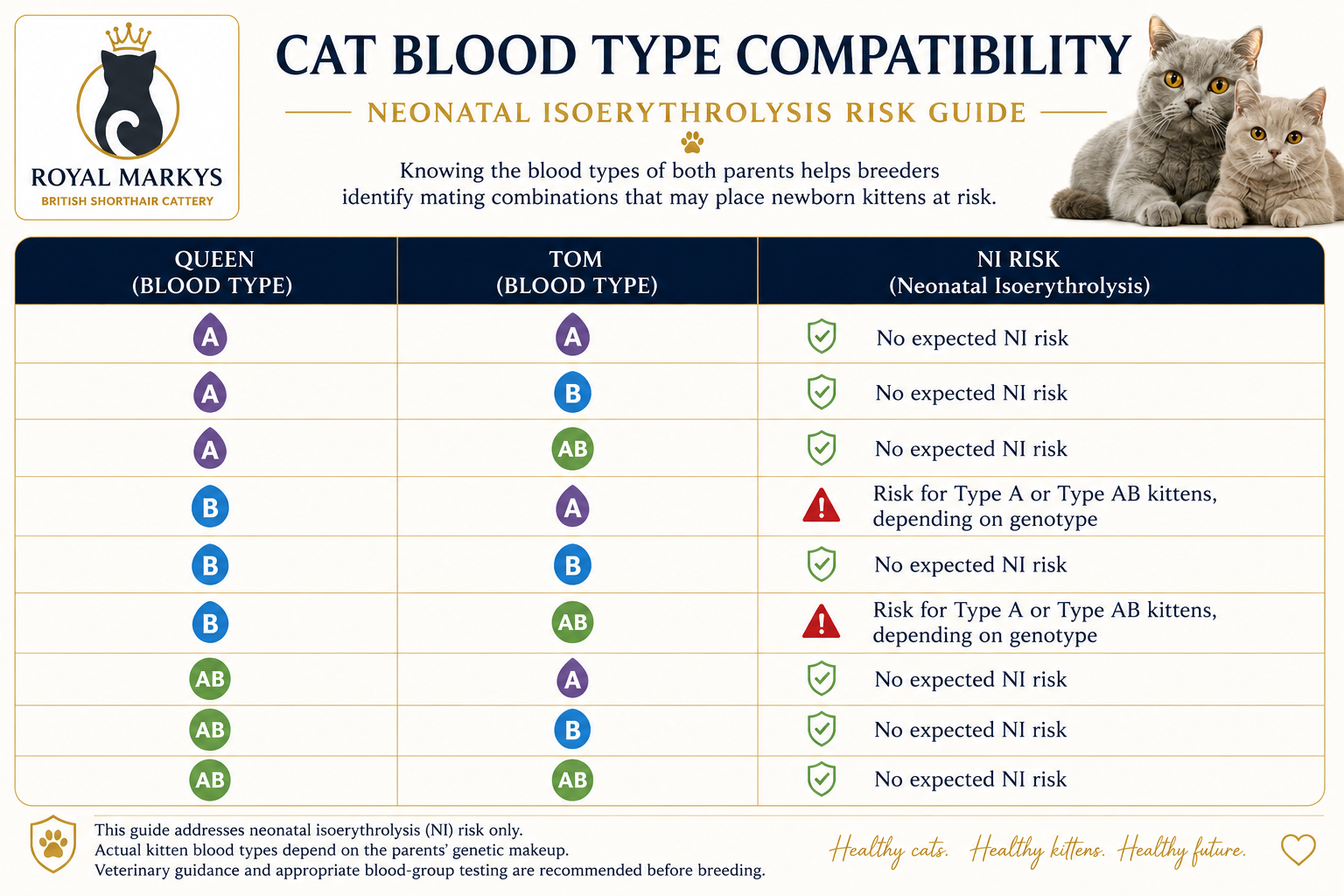
If a Type B queen gives birth to Type A or Type AB kittens, antibodies naturally present in her first milk (colostrum) may attack the kittens’ red blood cells after nursing. This condition is called Feline Neonatal Isoerythrolysis (NI).
Without prompt veterinary management, affected kittens may develop anemia, jaundice, weakness, dark-colored urine, fading kitten syndrome, or, in severe cases, may not survive.
Fortunately, this condition is largely preventable when breeders know the blood types of both parents before breeding.
Blood-Type Compatibility and NI Risk
The table below summarizes the expected risk of Neonatal Isoerythrolysis (NI) based on the blood types of the queen and the tom.
The primary concern is when a Type B queen is bred to a tom capable of producing Type A or Type AB kittens.
Knowing the blood types of both parents allows breeders to identify potentially incompatible matings and plan appropriate veterinary management when necessary.
(Insert the compatibility table here.)
DNA Testing and Blood Typing Are Different
Although both tests are important, they serve different purposes.
DNA health testing helps identify inherited genetic conditions that may affect future generations.
Blood typing helps breeders identify mating combinations that could place newborn kittens at risk of Neonatal Isoerythrolysis (NI).
Together, these tests allow breeders to make safer and more informed breeding decisions.
Responsible Breeding Comes First
Responsible breeding means planning every litter with the health of both parents and every future kitten in mind.
At Royal Markys British Shorthair Cattery, we combine DNA health testing, blood typing, pedigrees, temperament, veterinary guidance, and responsible breeding practices to give every kitten the healthiest possible start in life.
Healthy kittens begin long before birth—with knowledge, careful testing, and responsible planning.